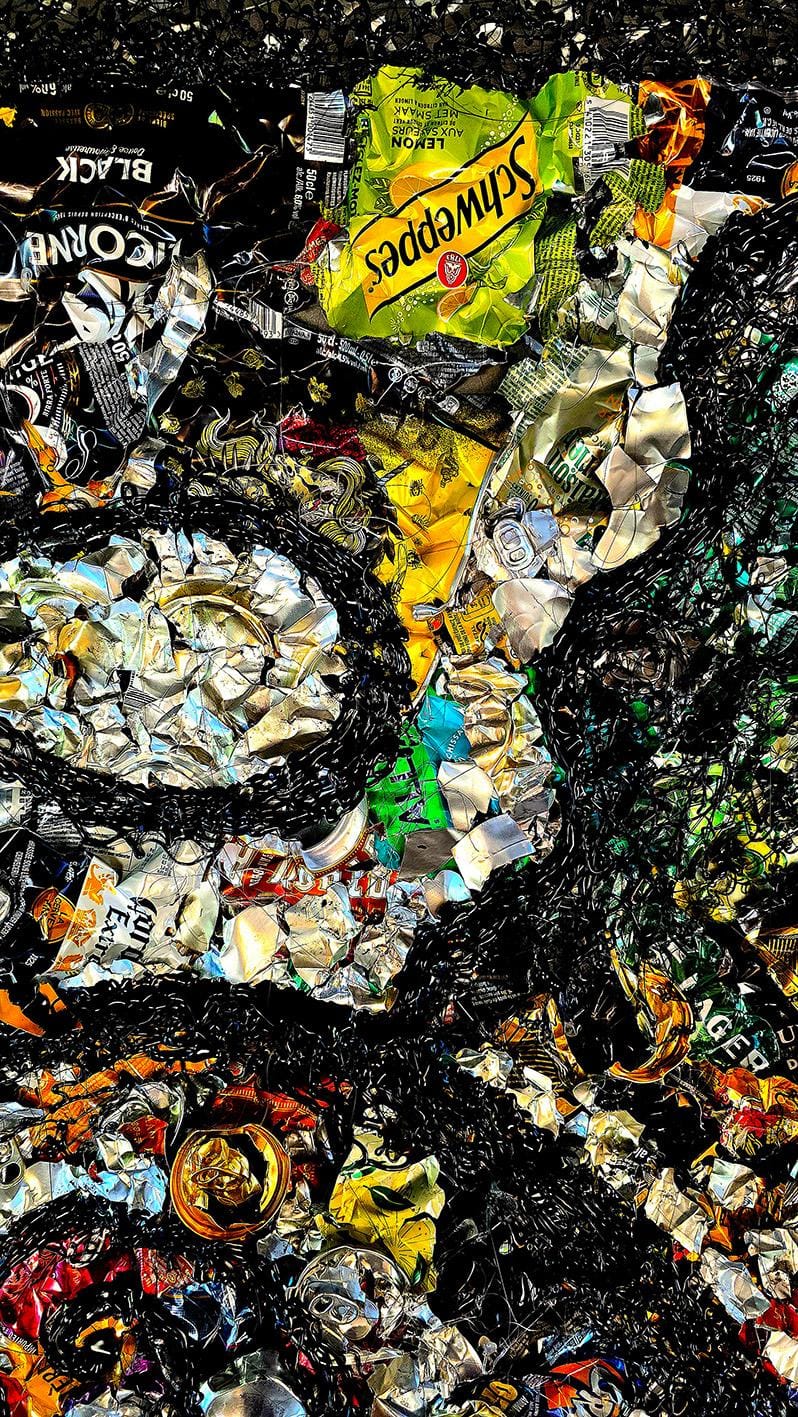
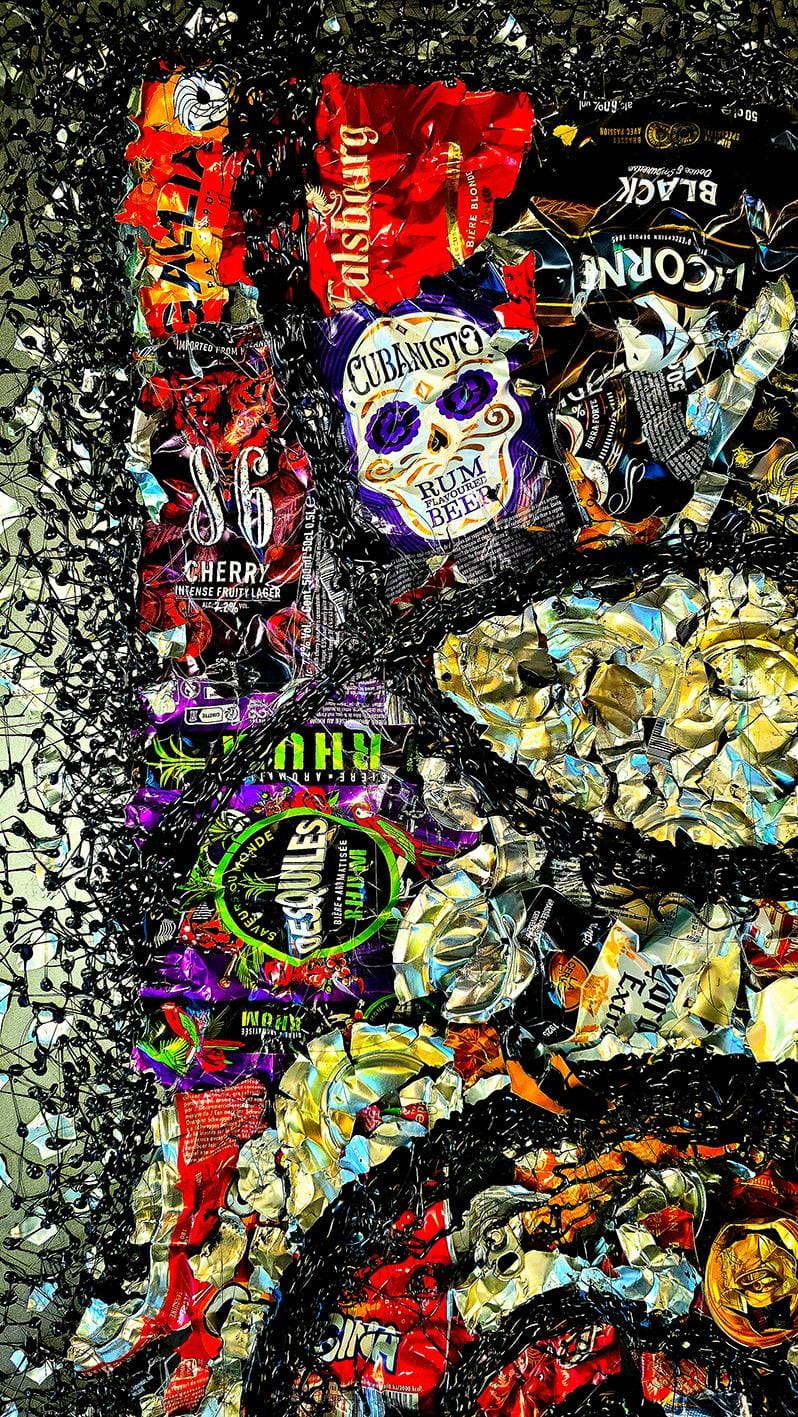
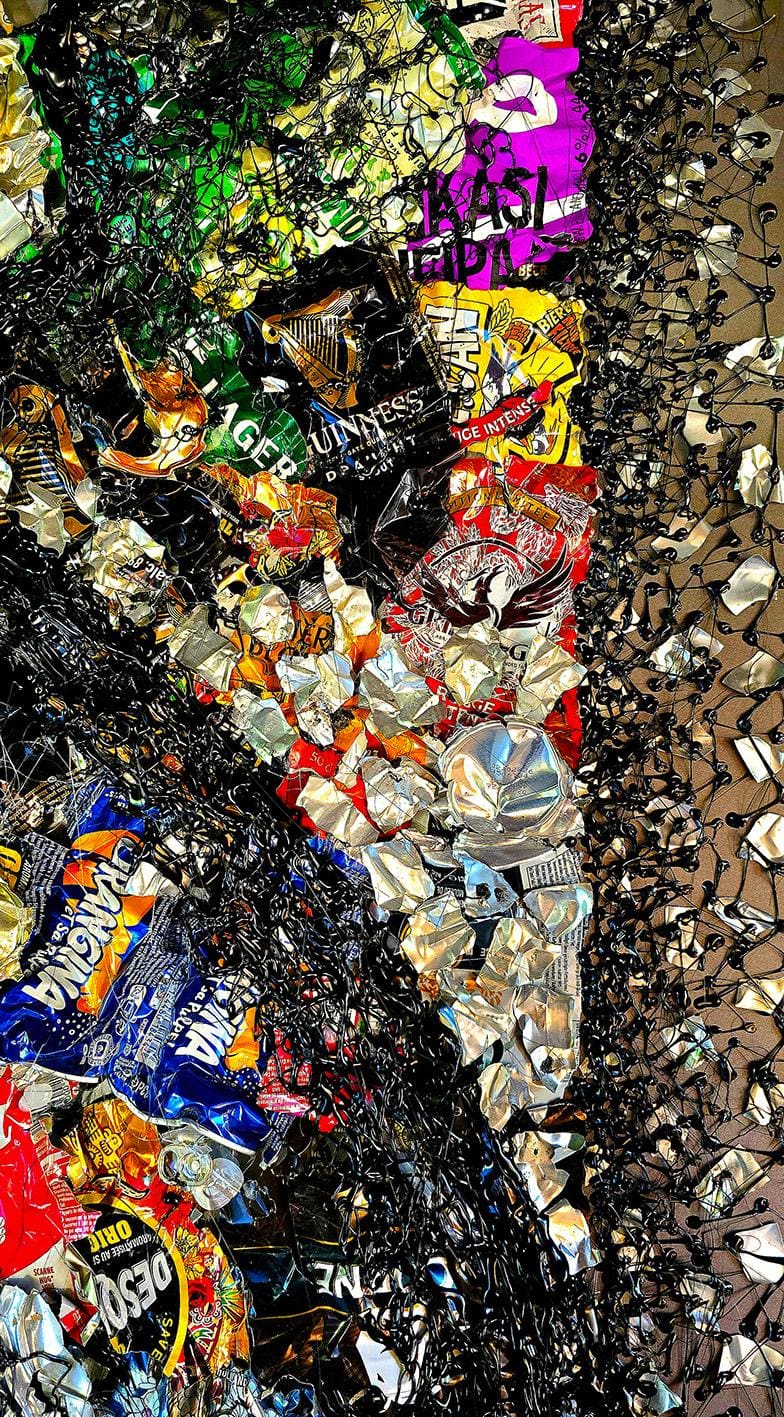
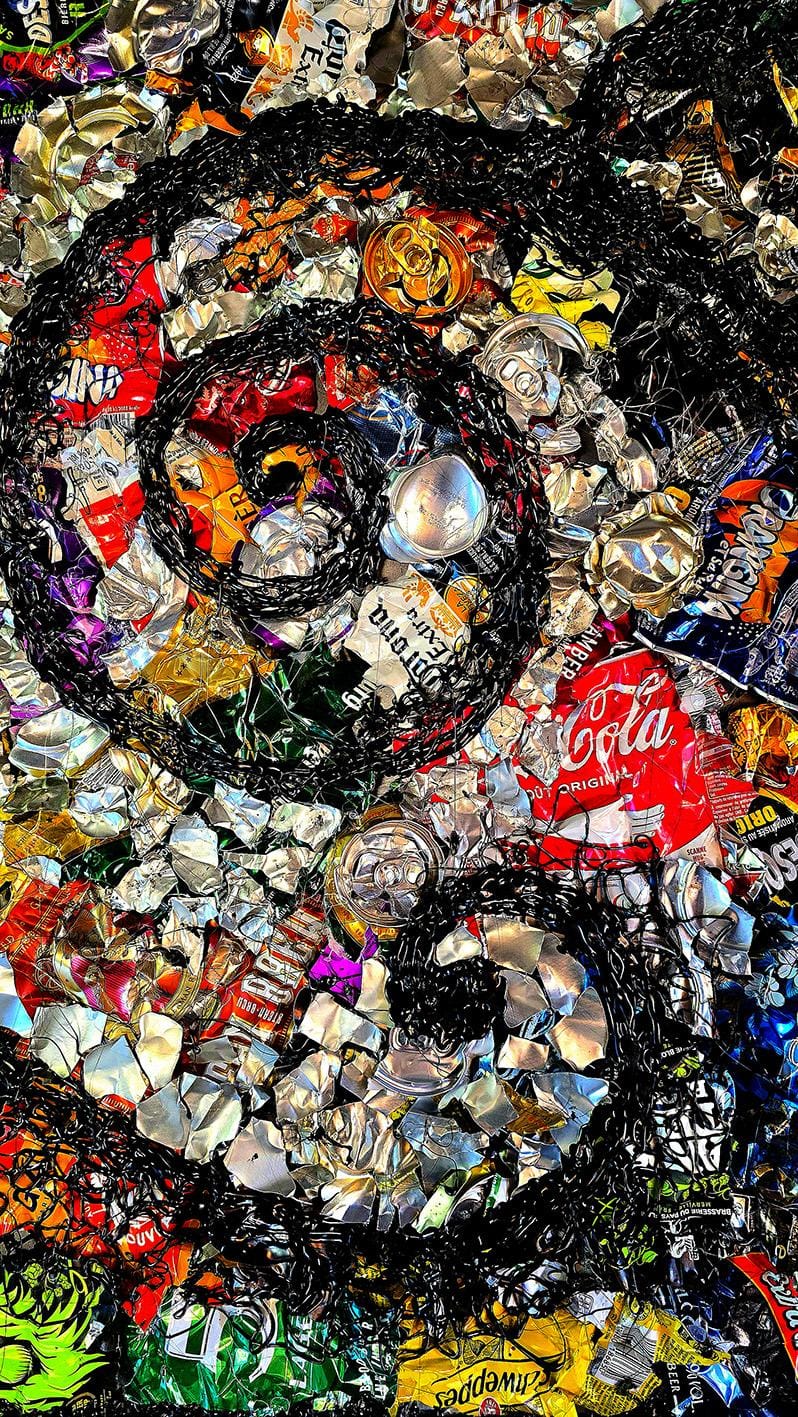
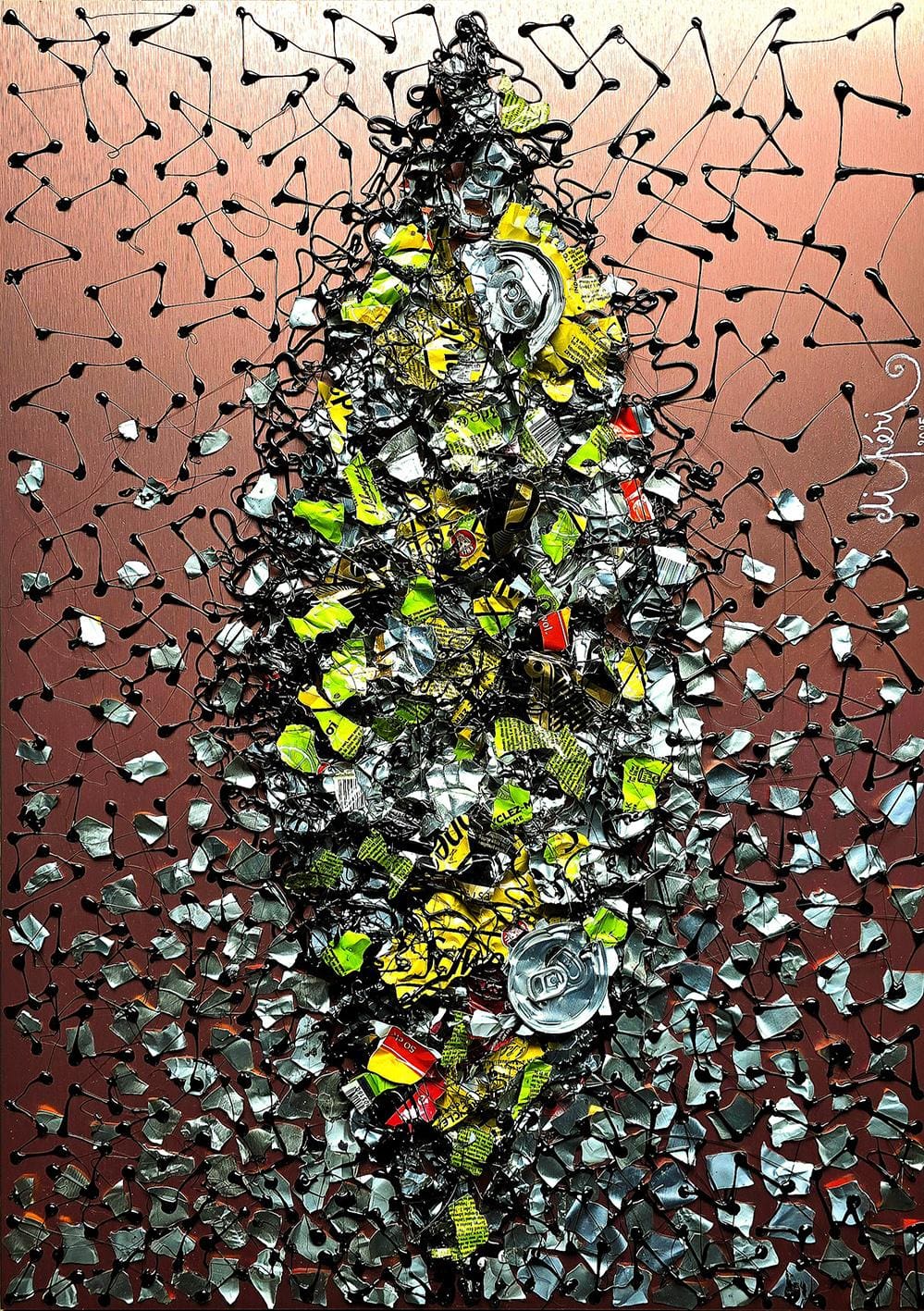
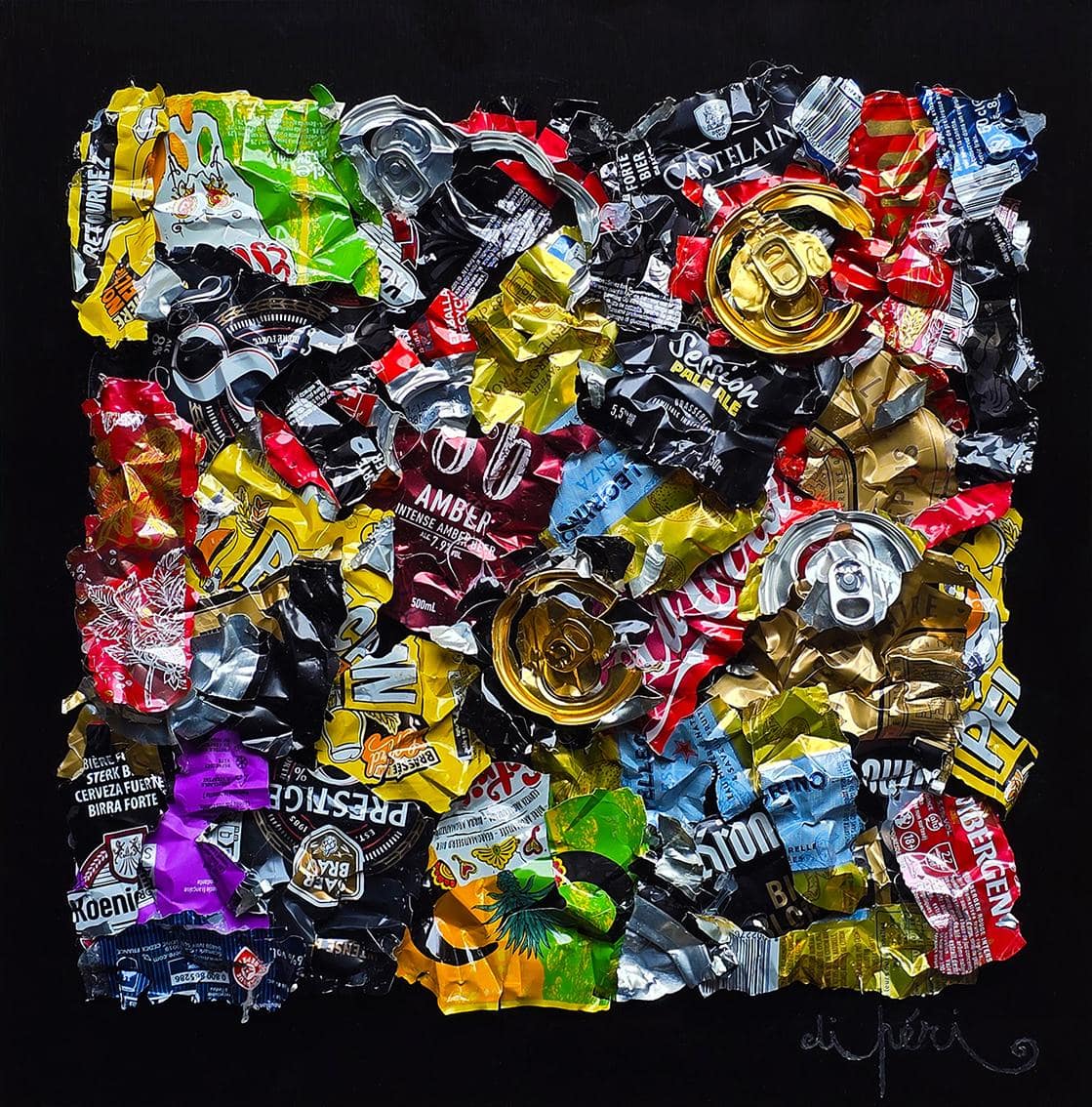
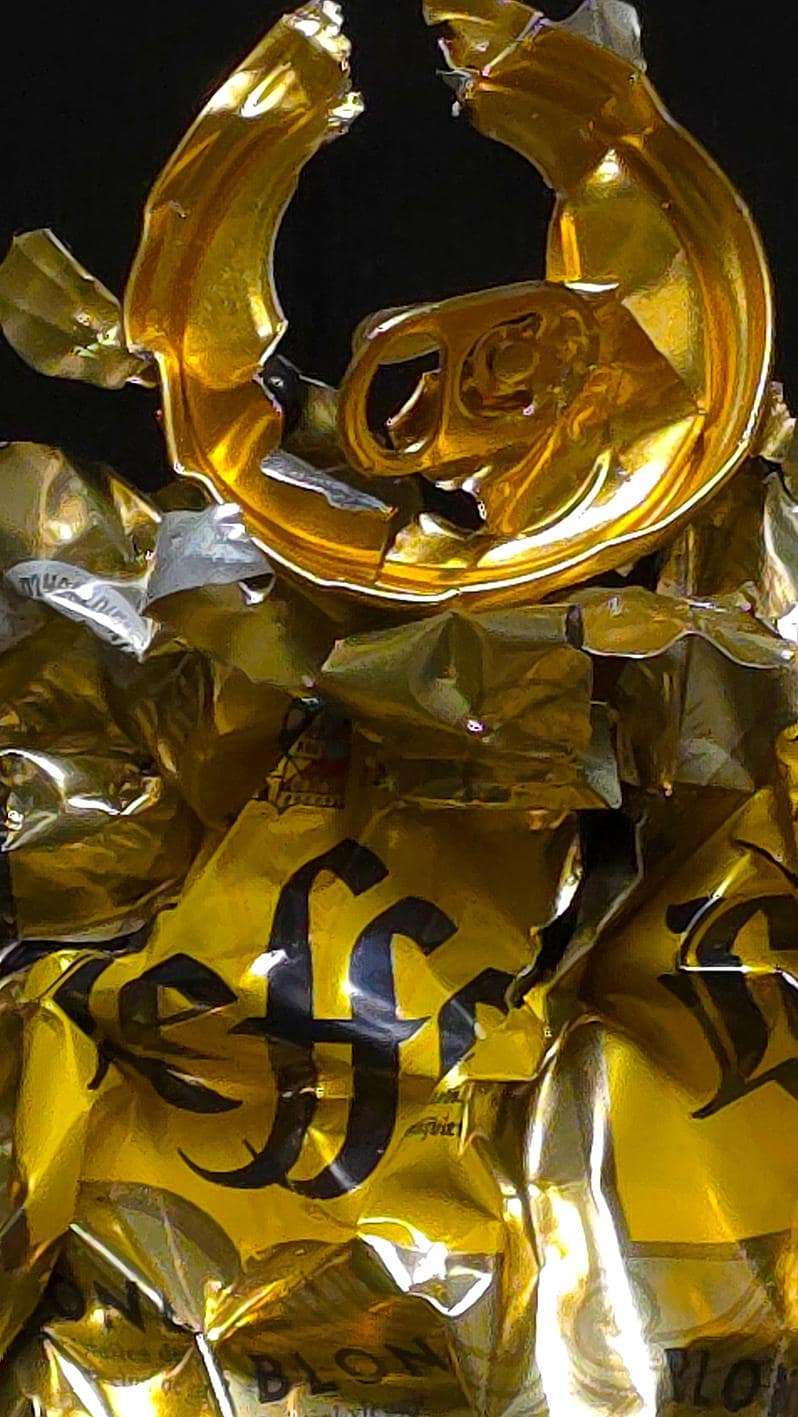
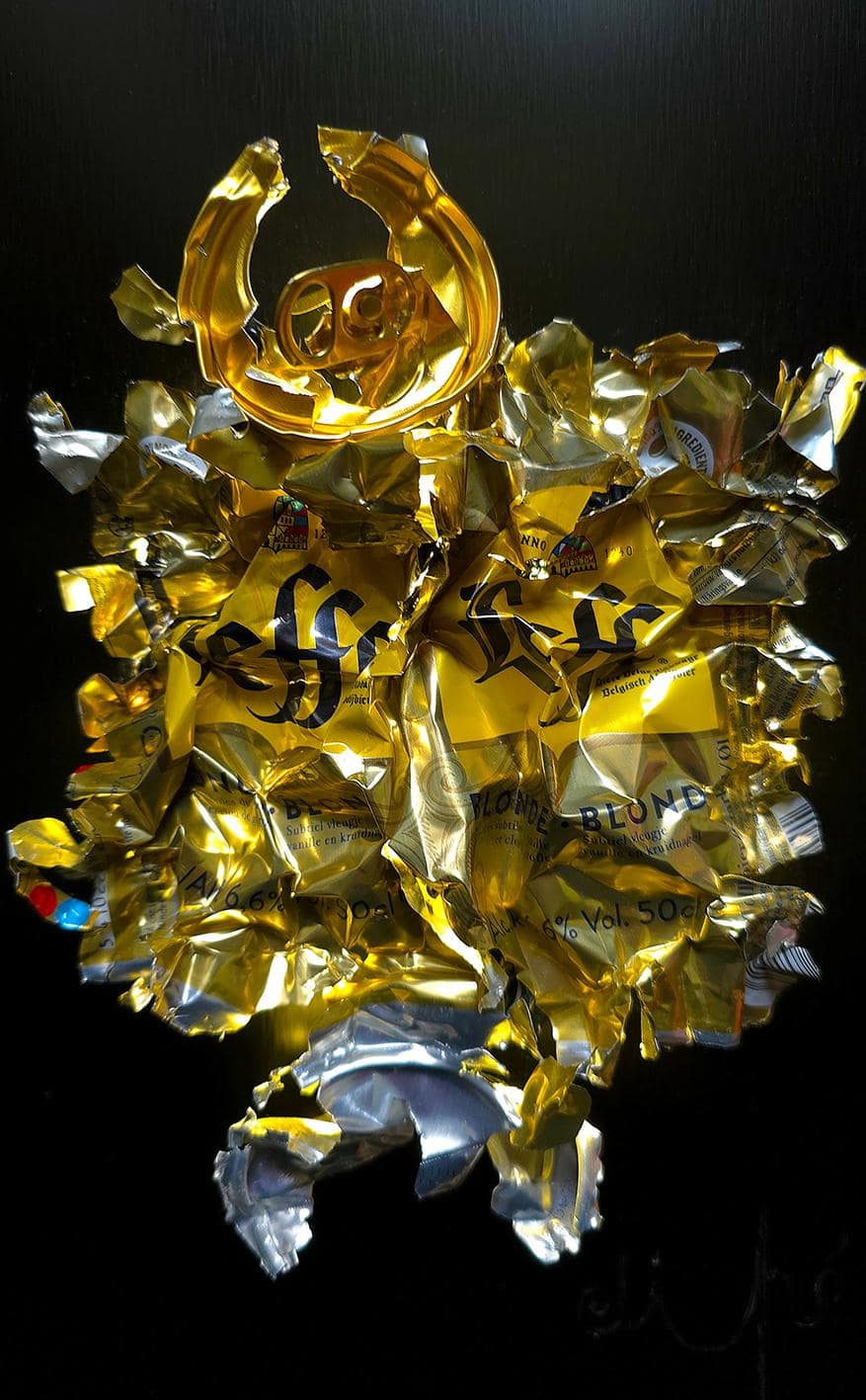
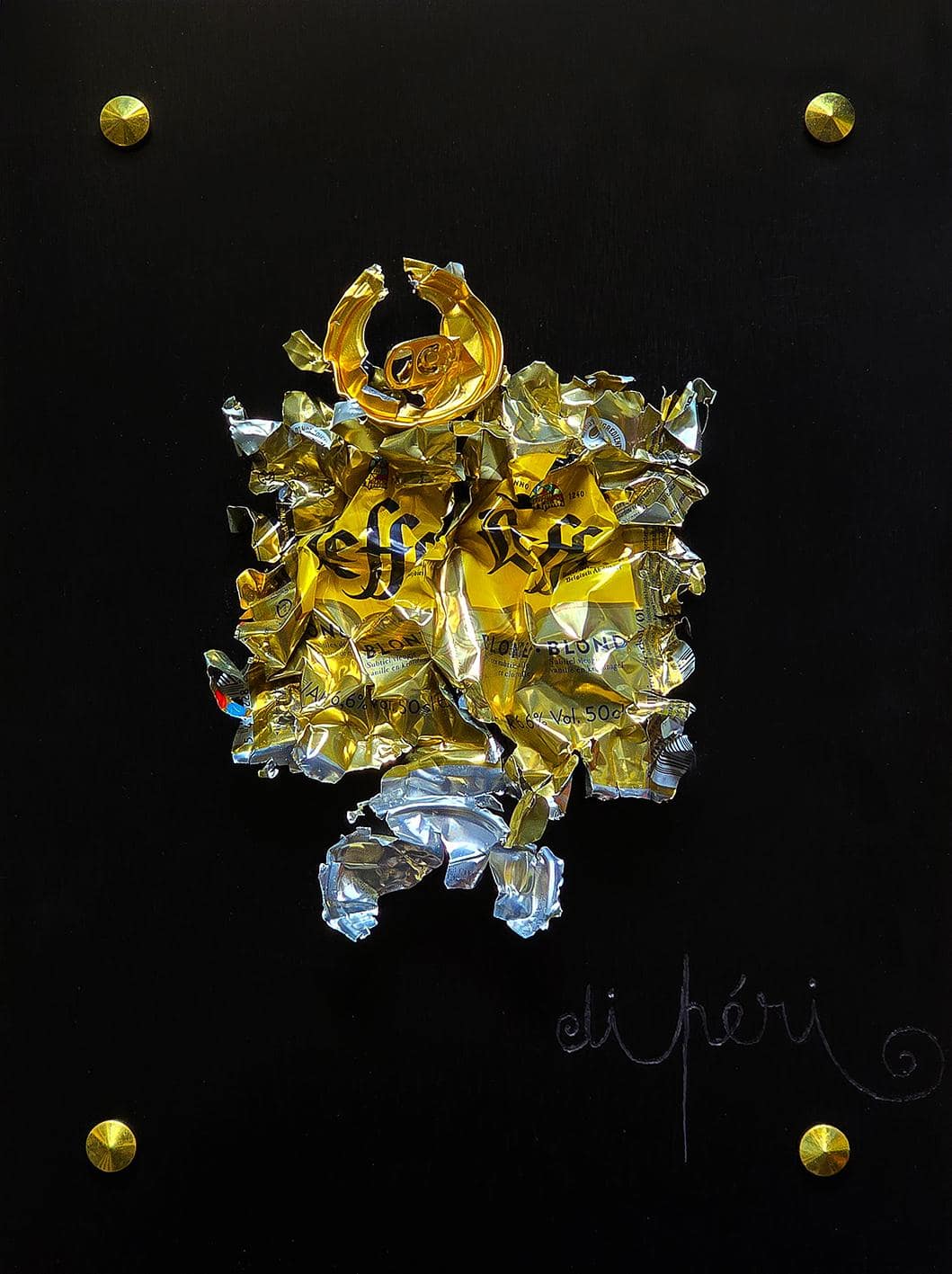
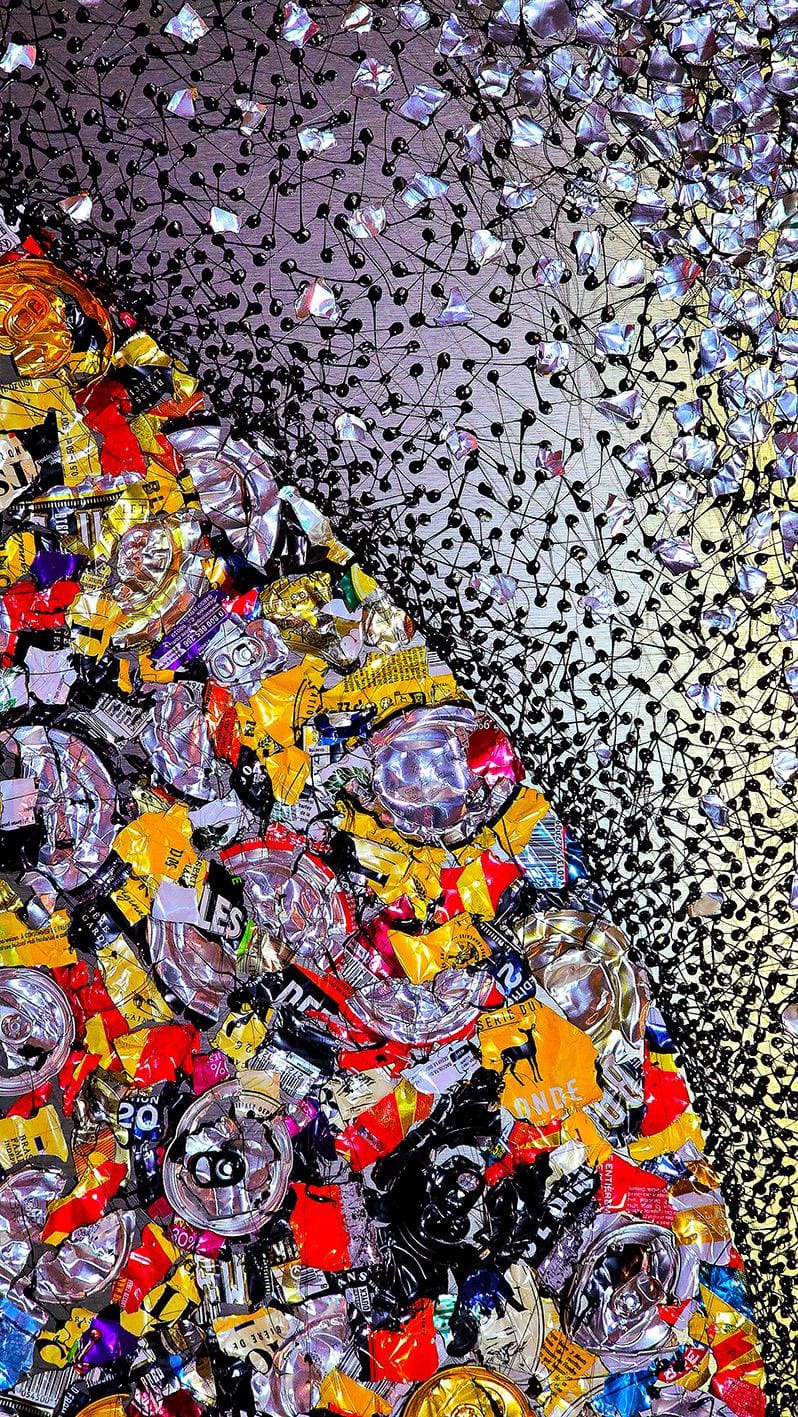
Like the Mues series — which invites consumerist matter into a poetic metamorphosis, asking “Do inanimate objects have a soul?” — the new collection Packchwork extends and expands Pascal di Péri’s artistic approach.
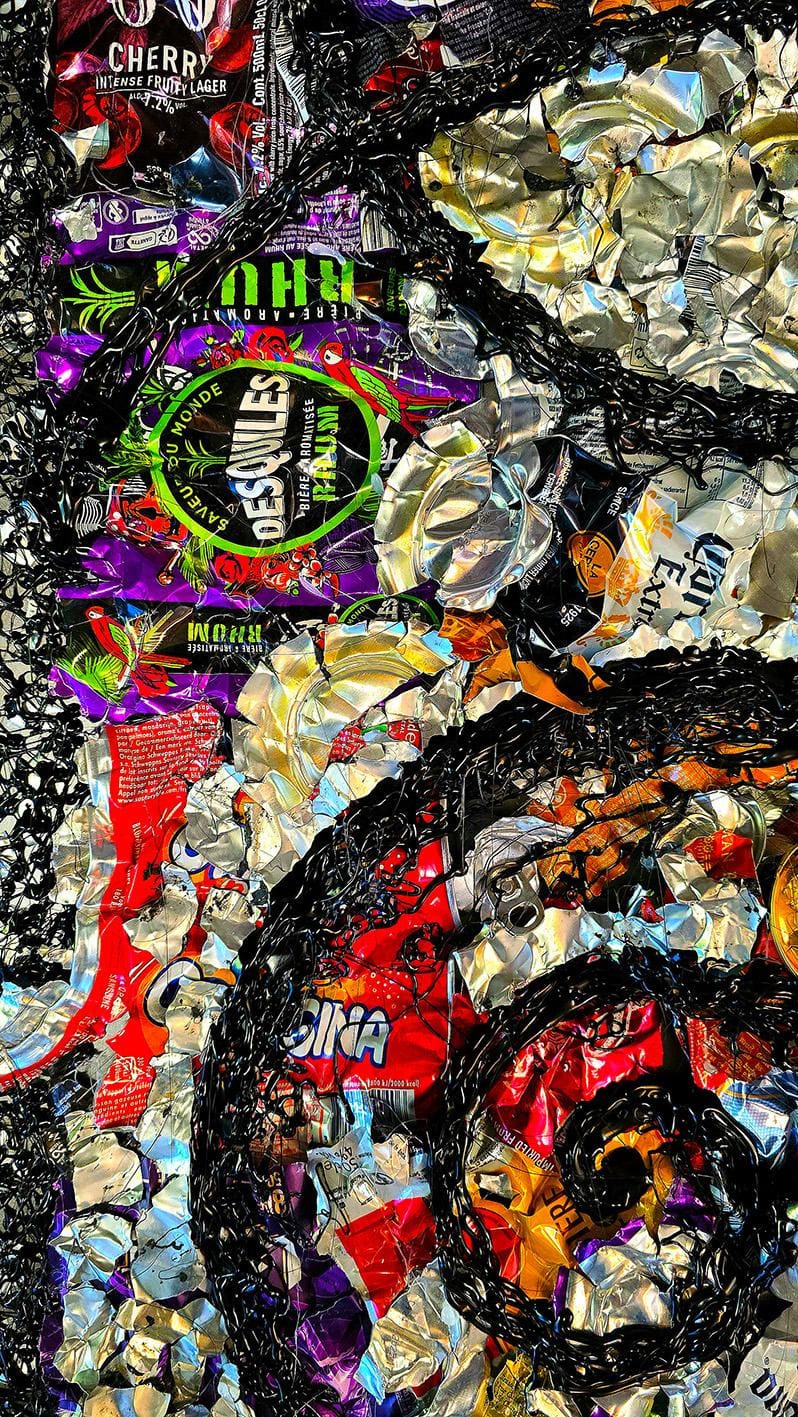
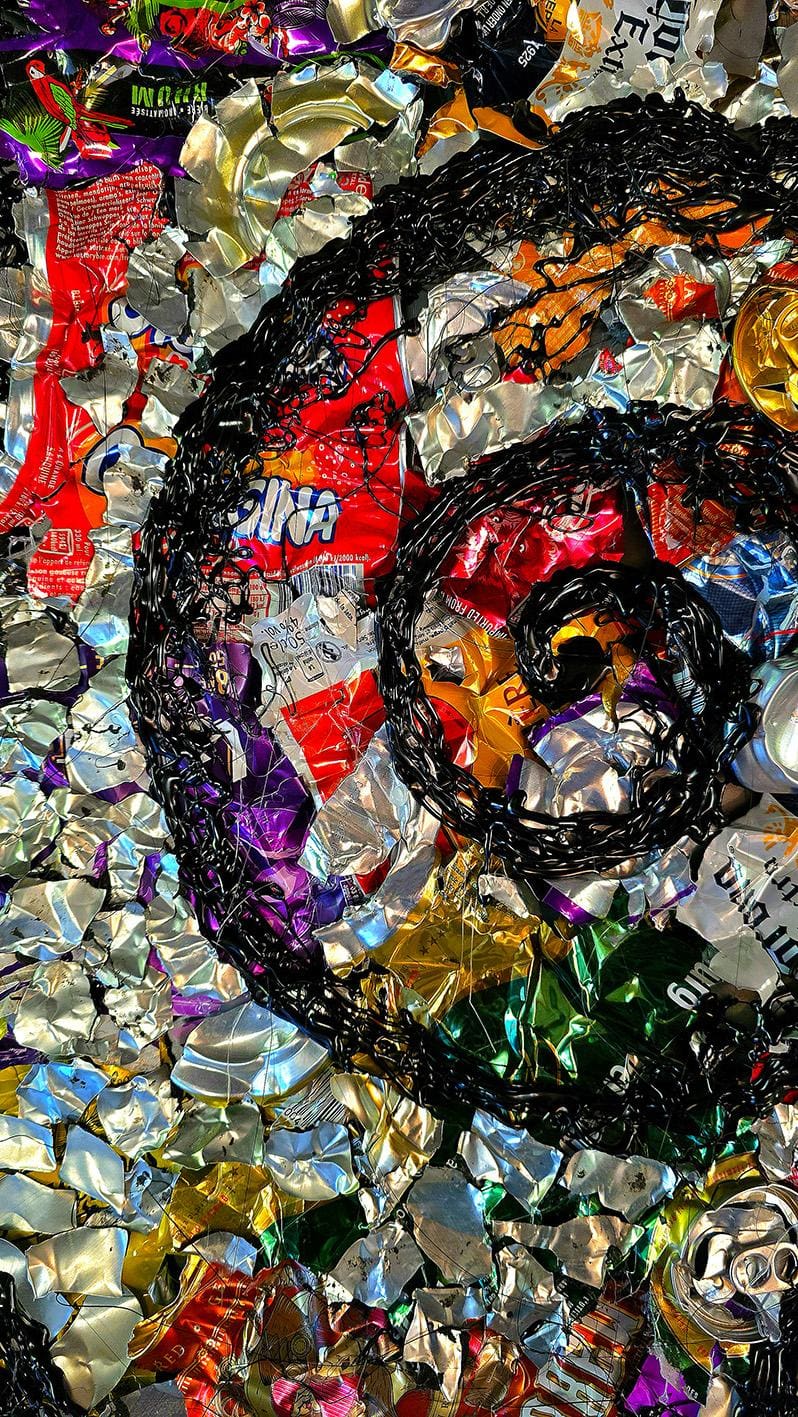
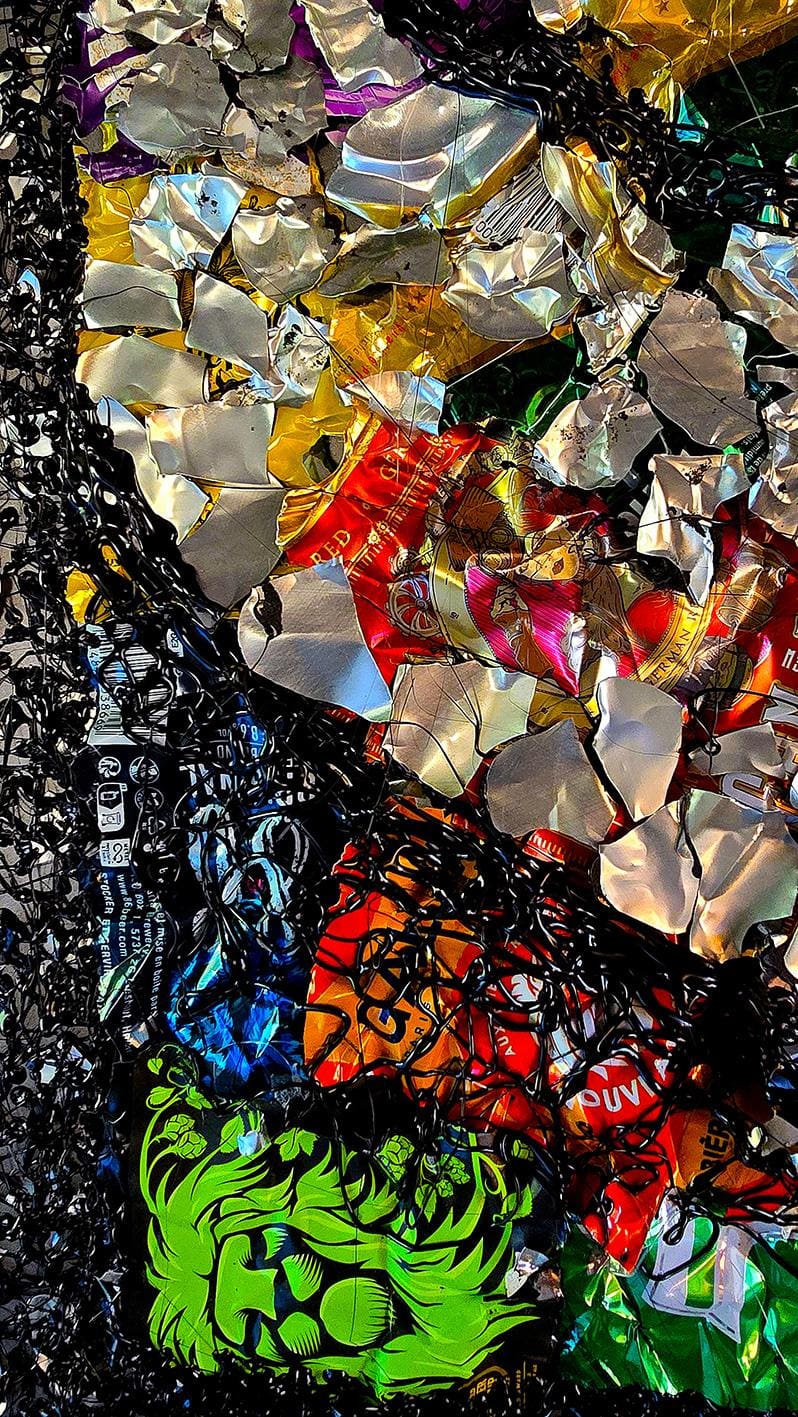
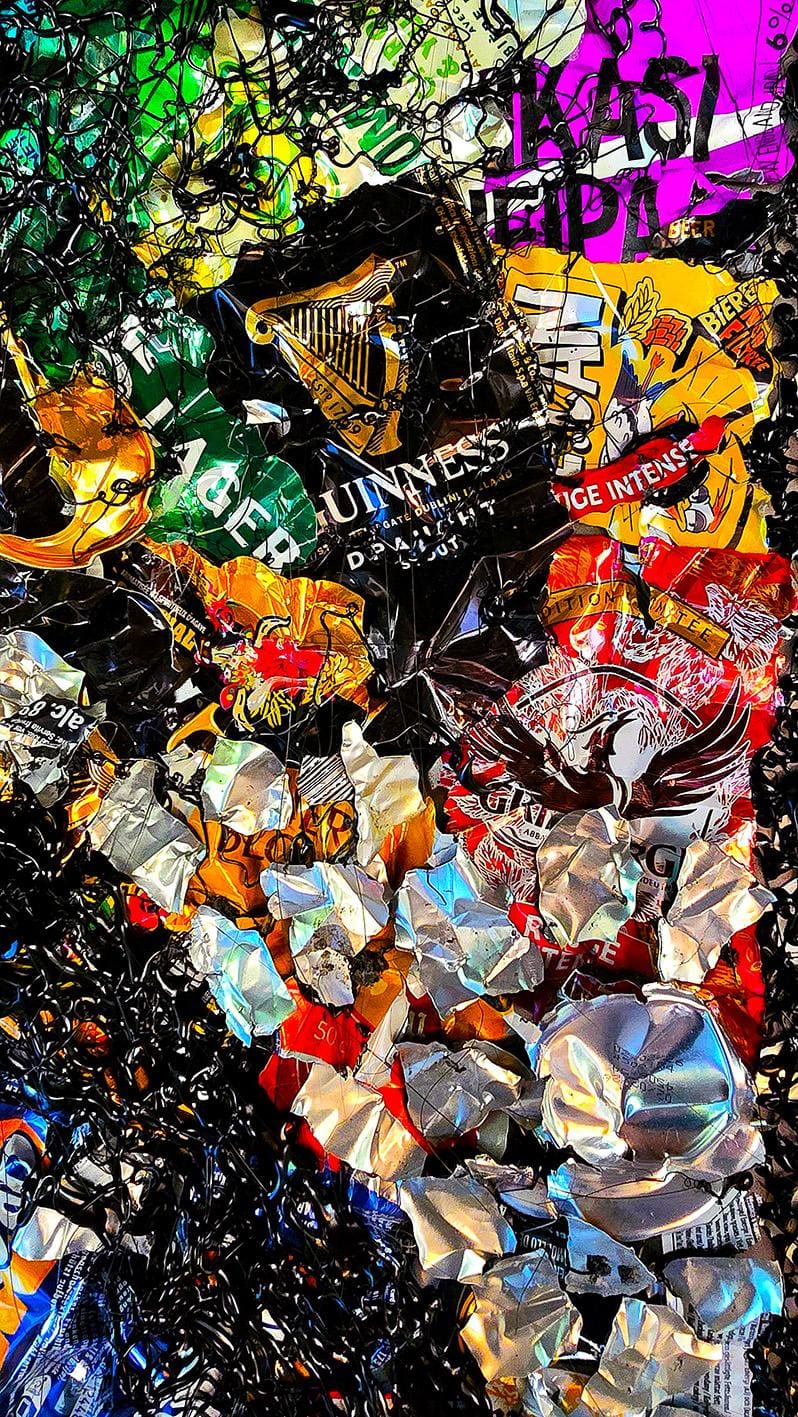
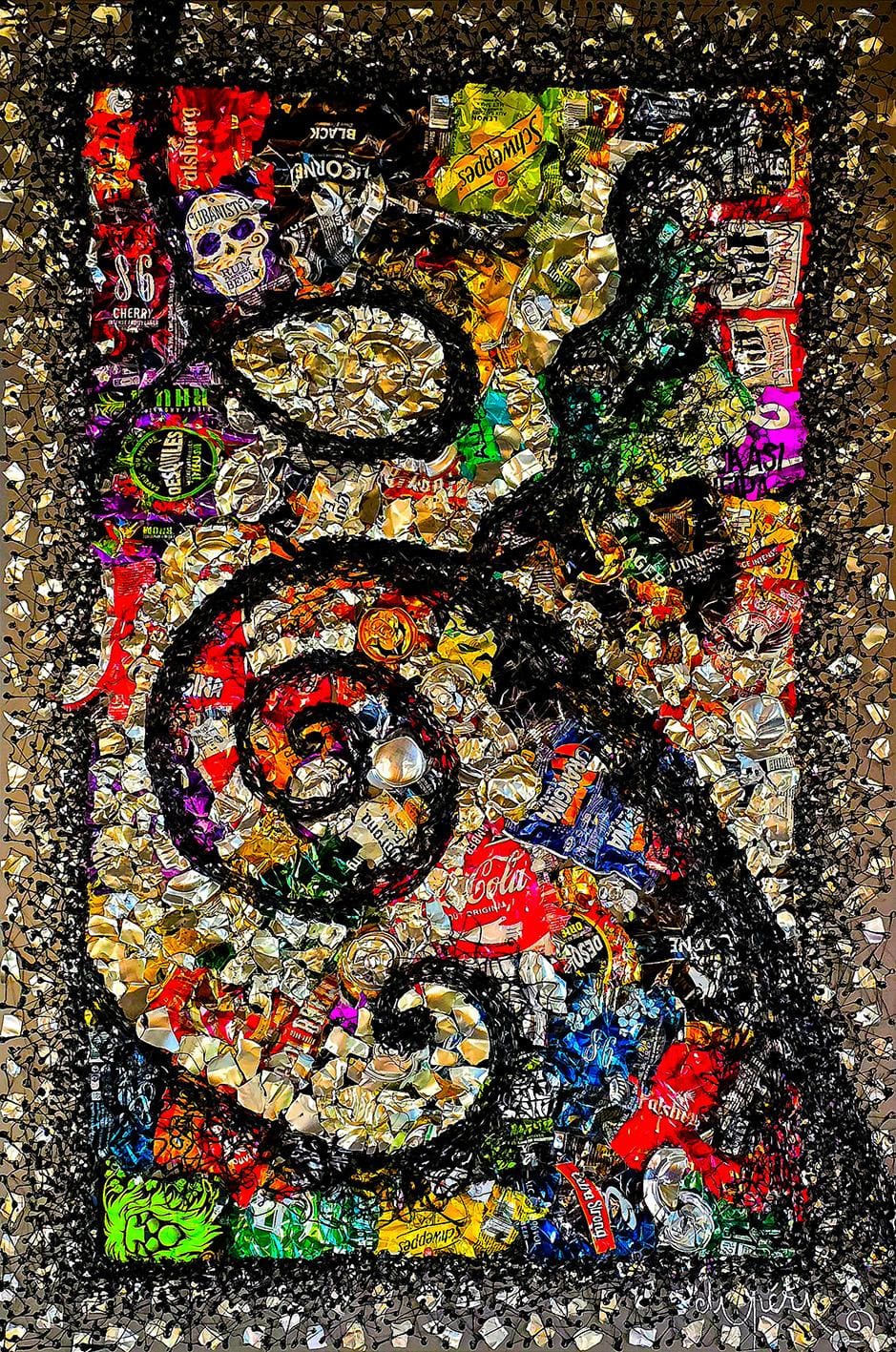
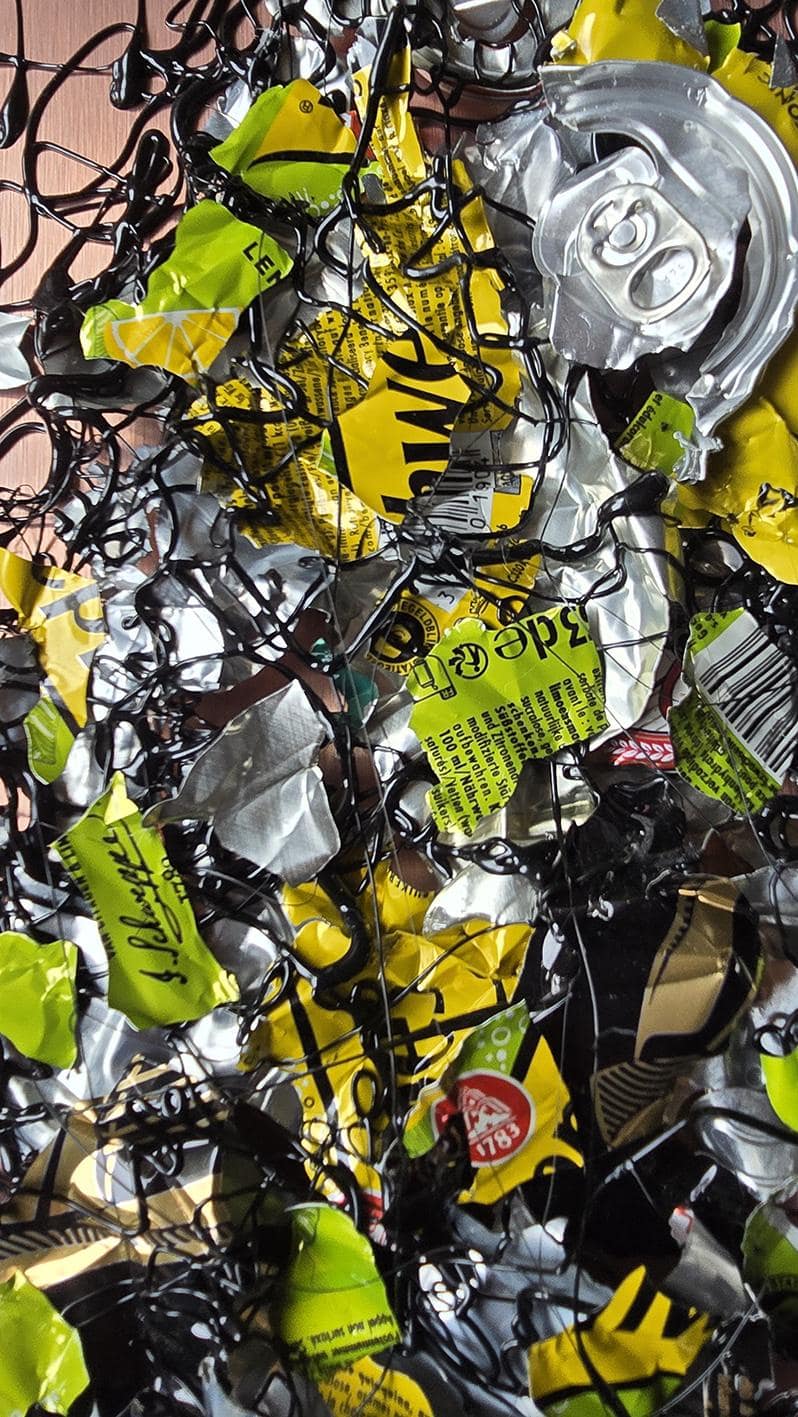
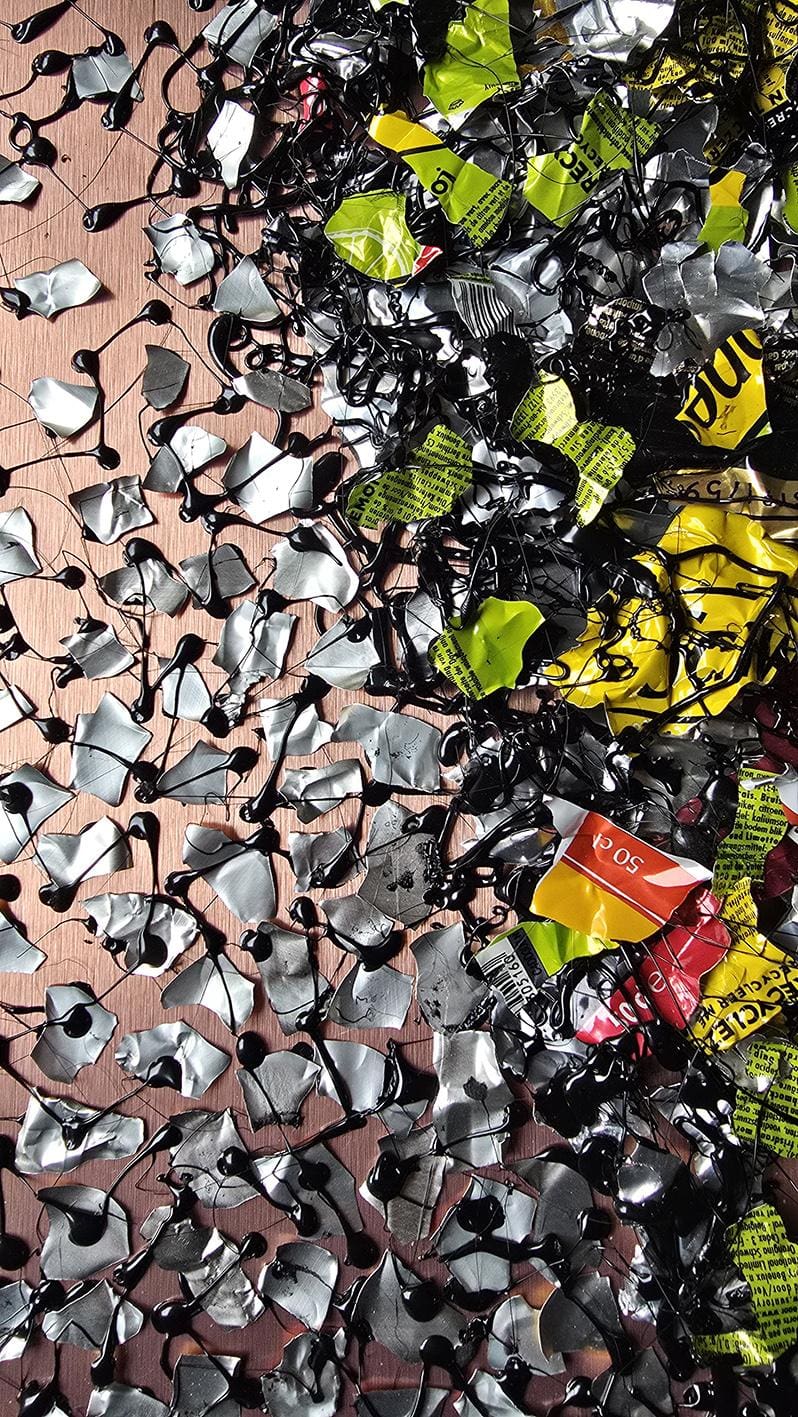
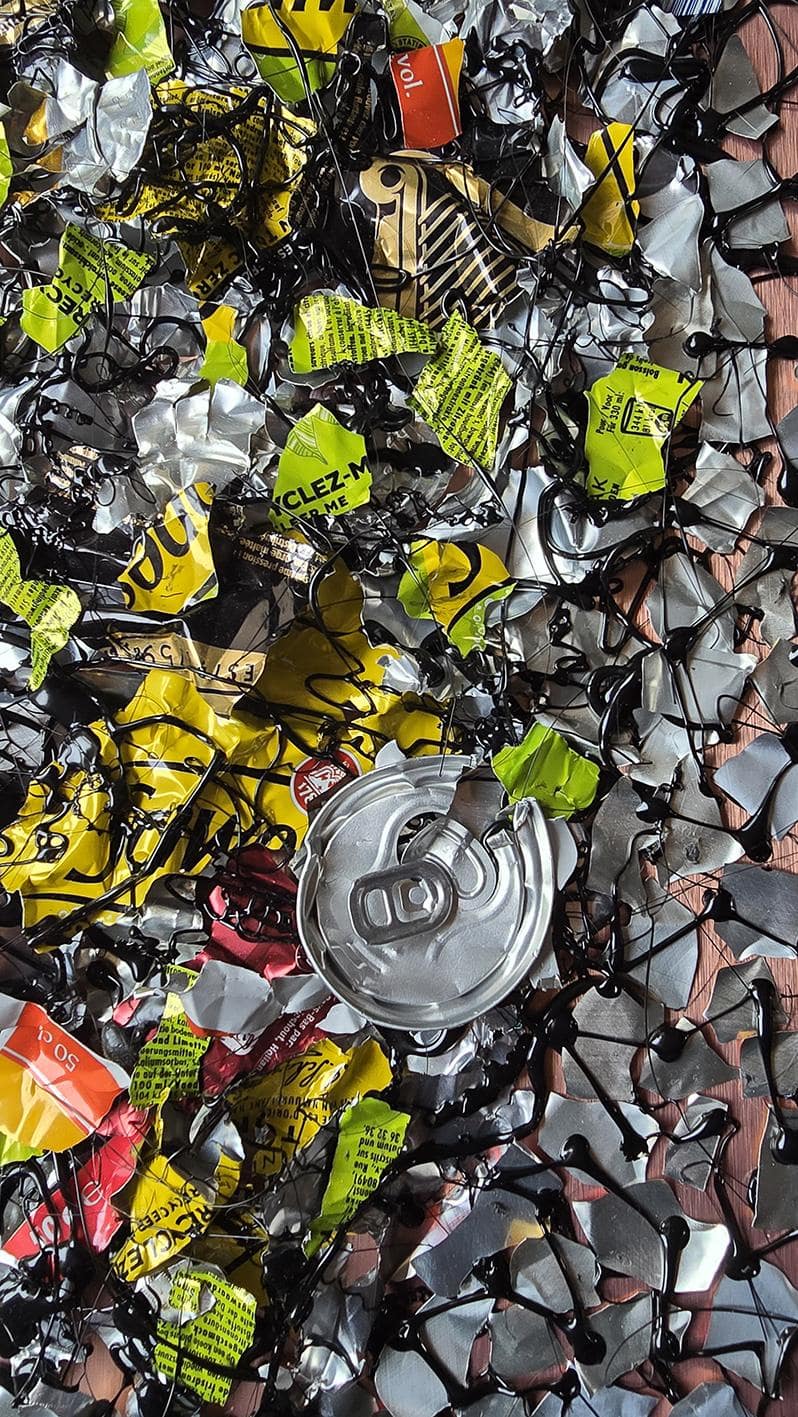
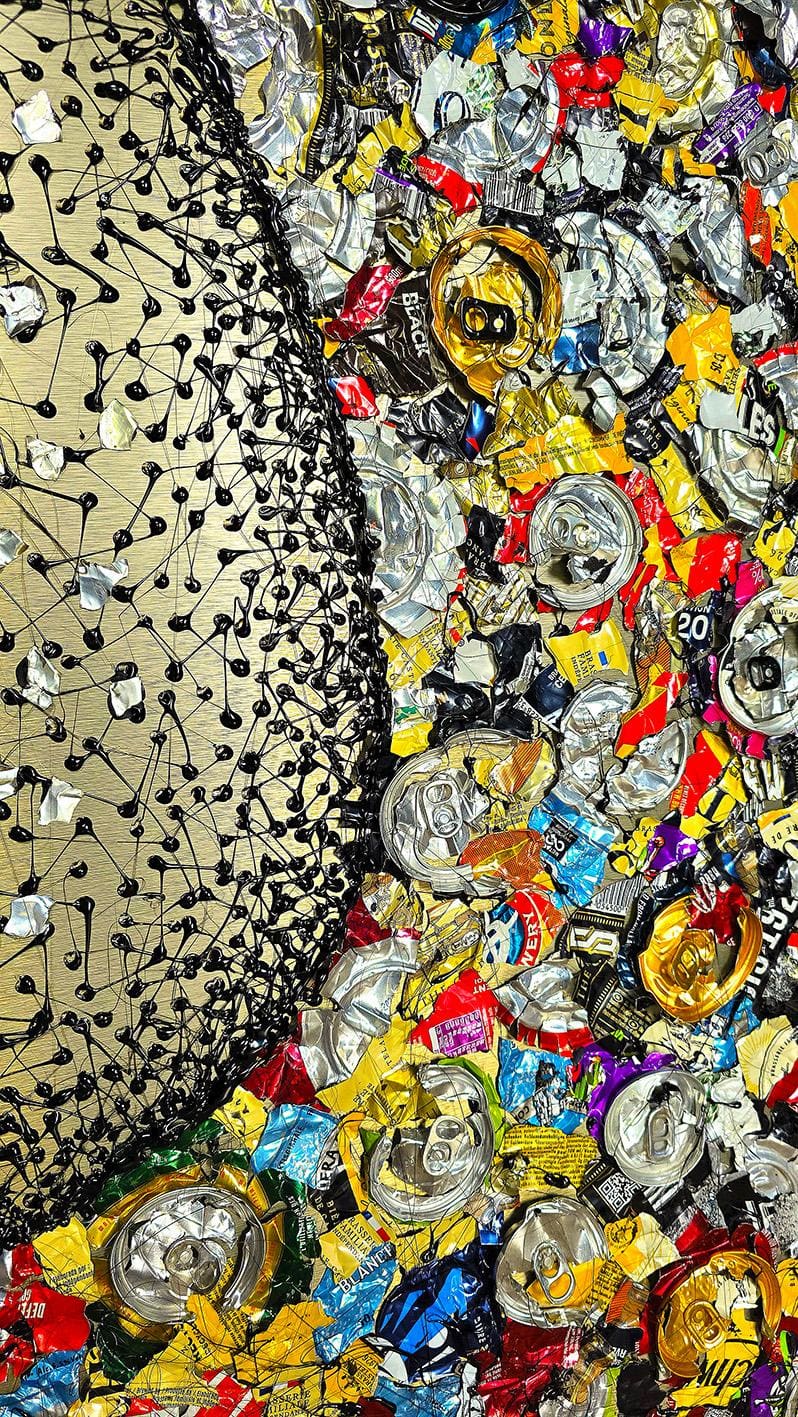
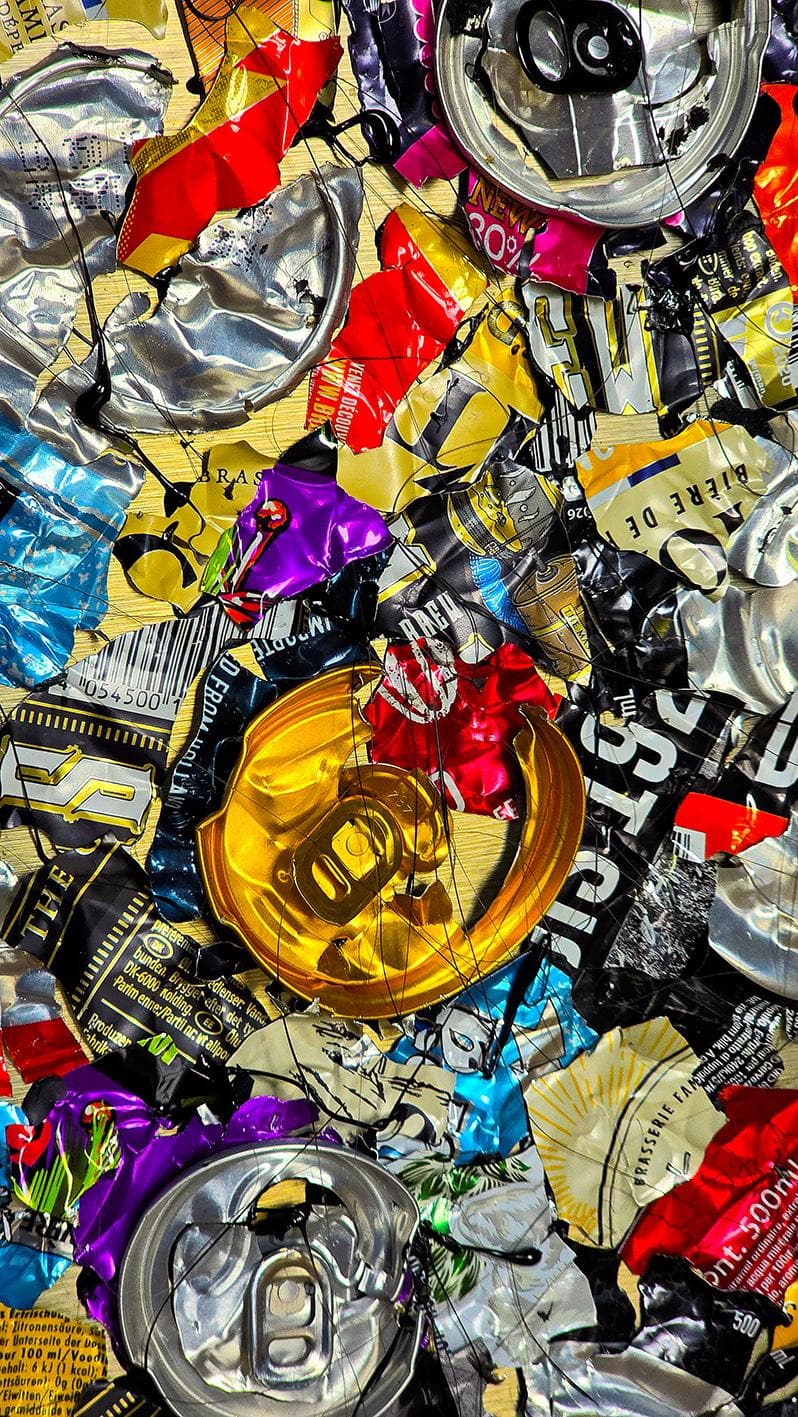
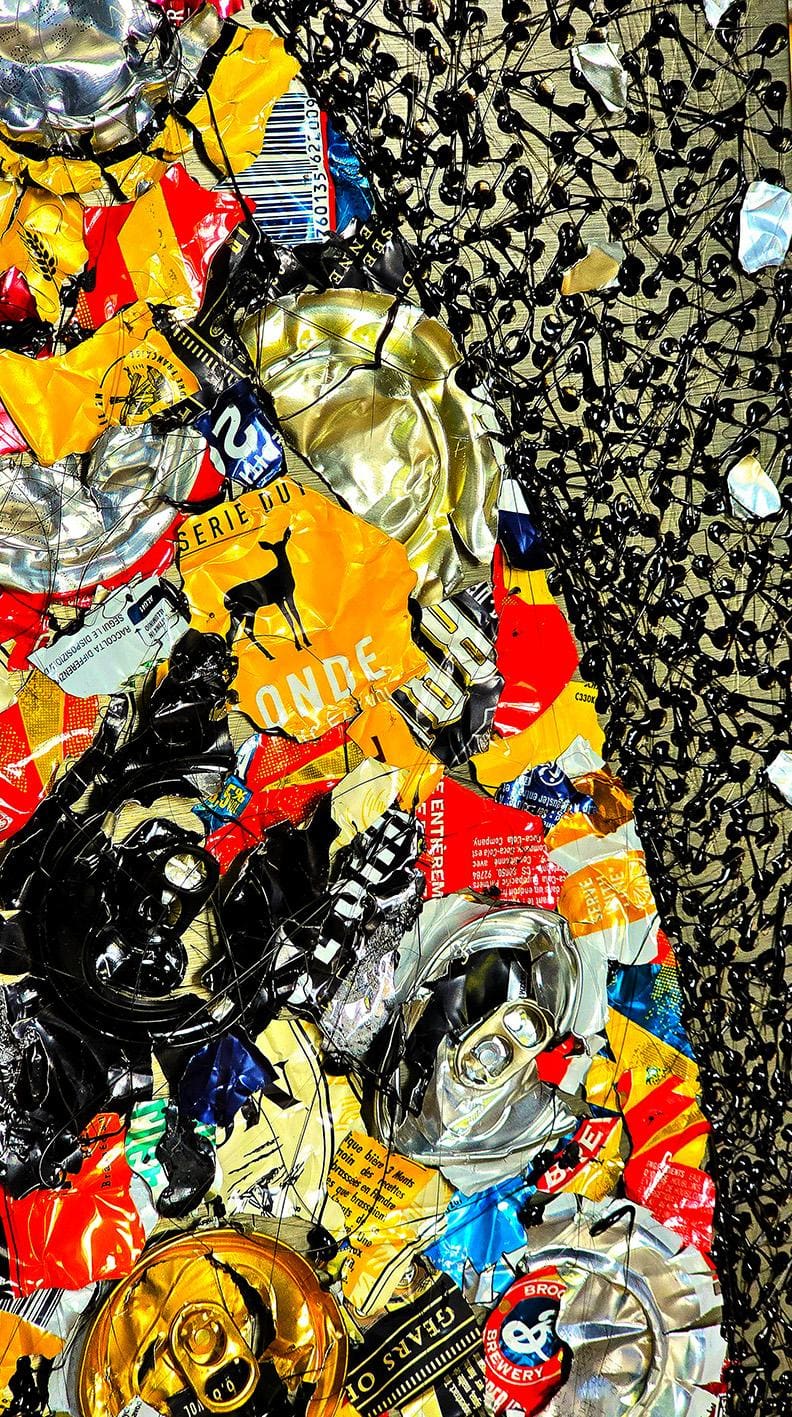
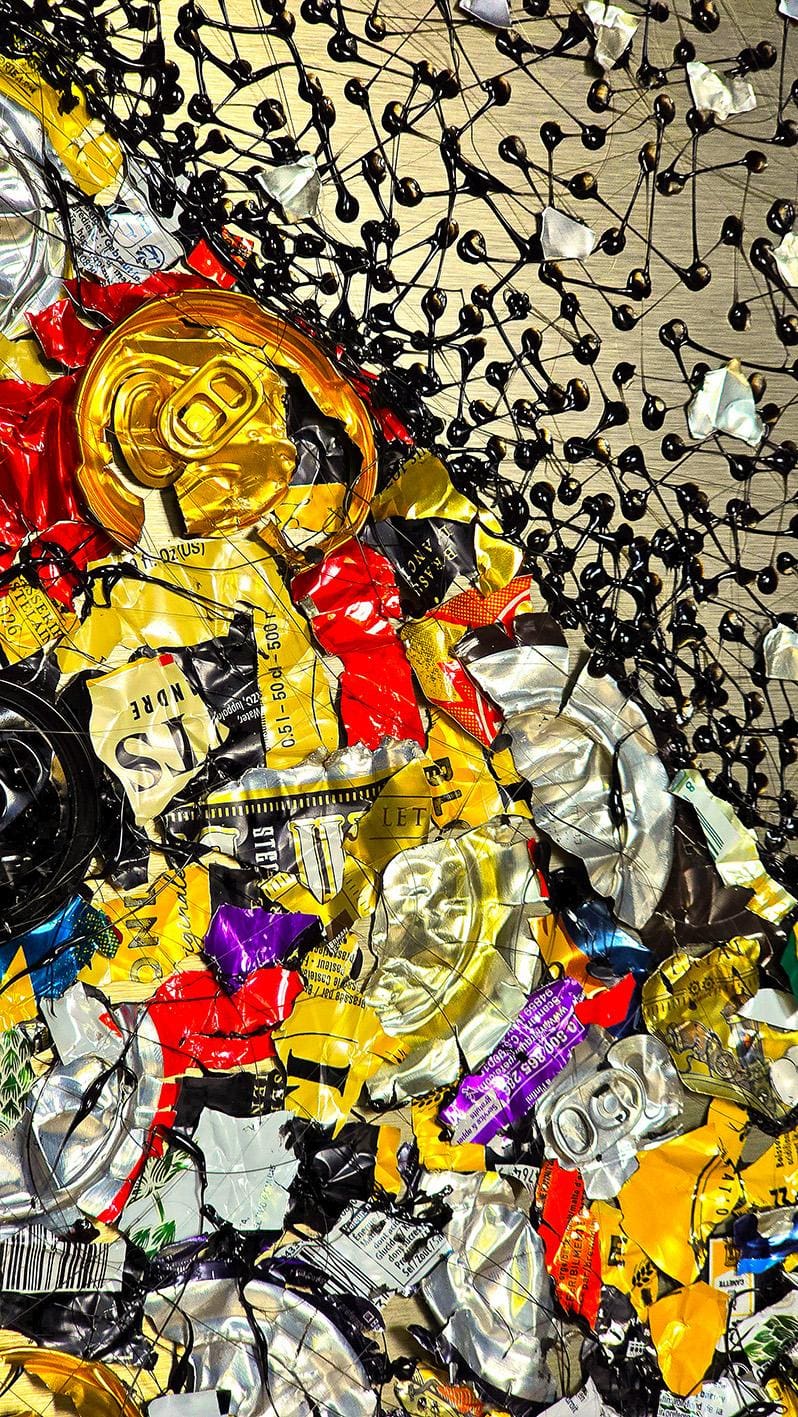
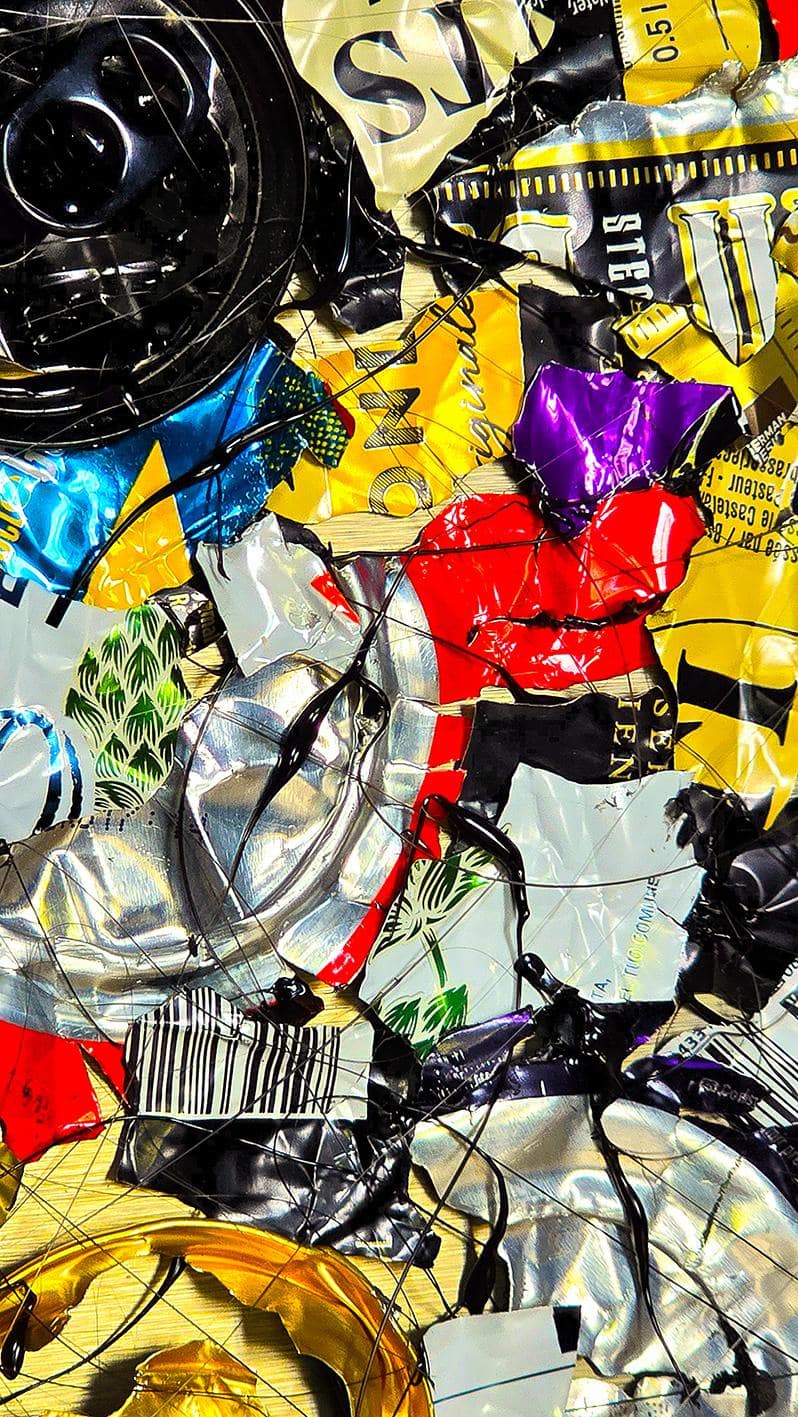
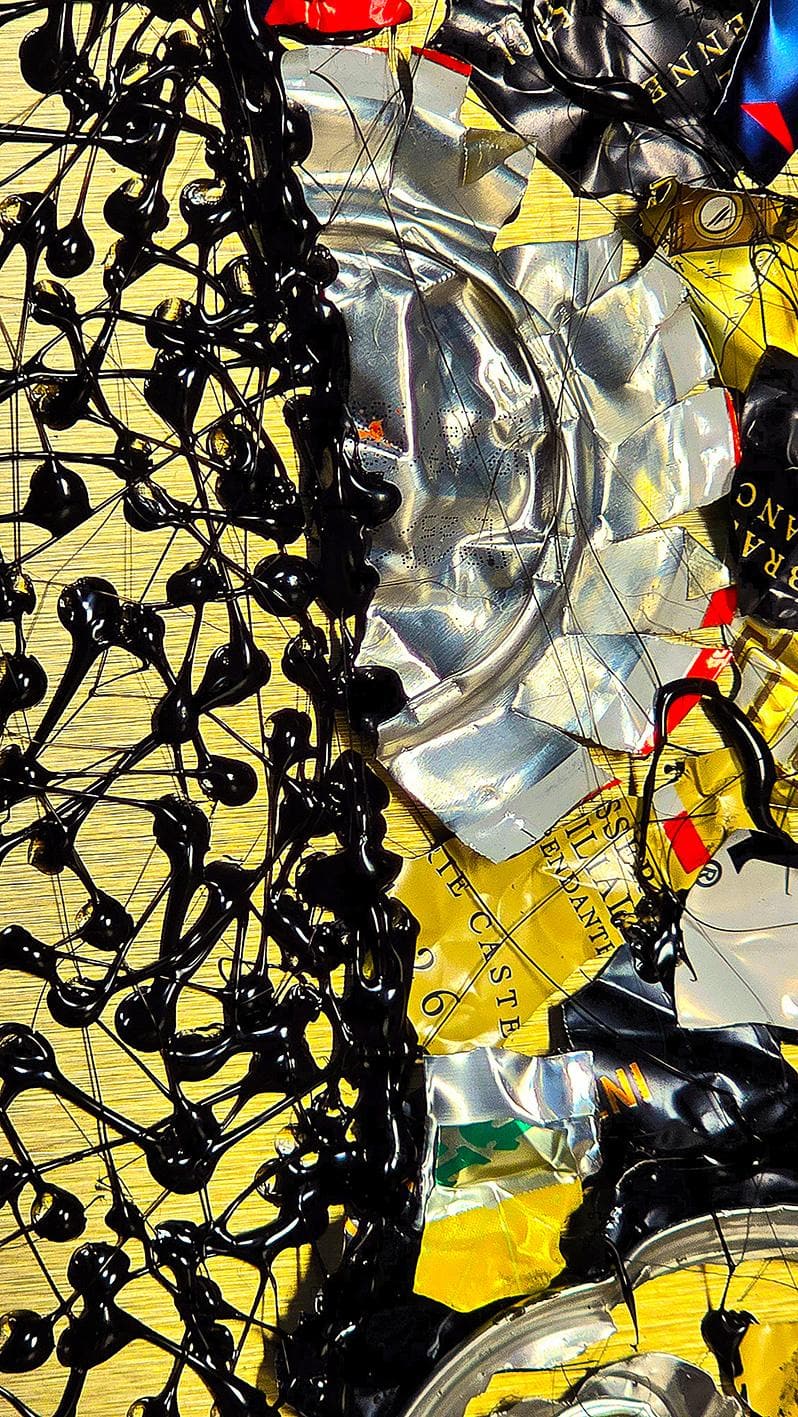
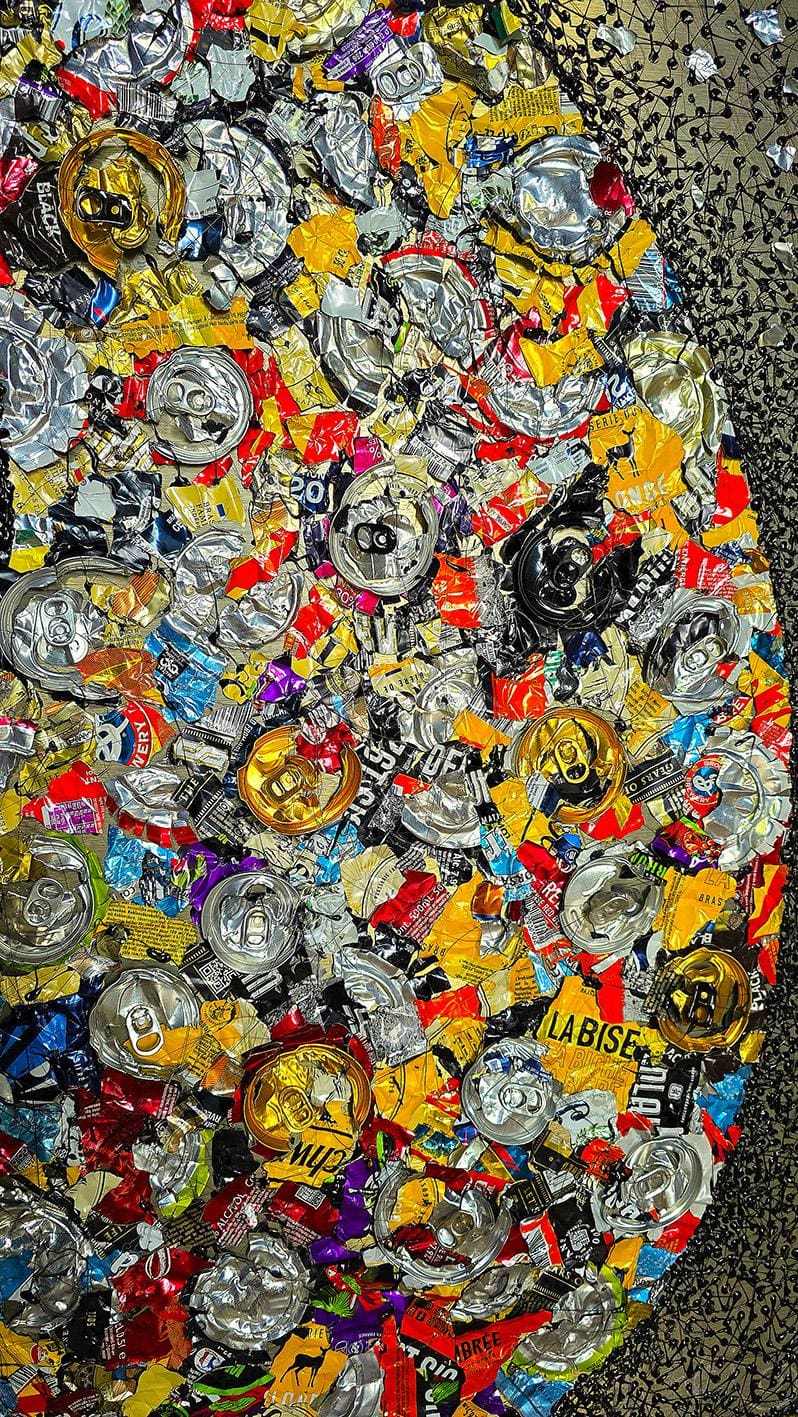
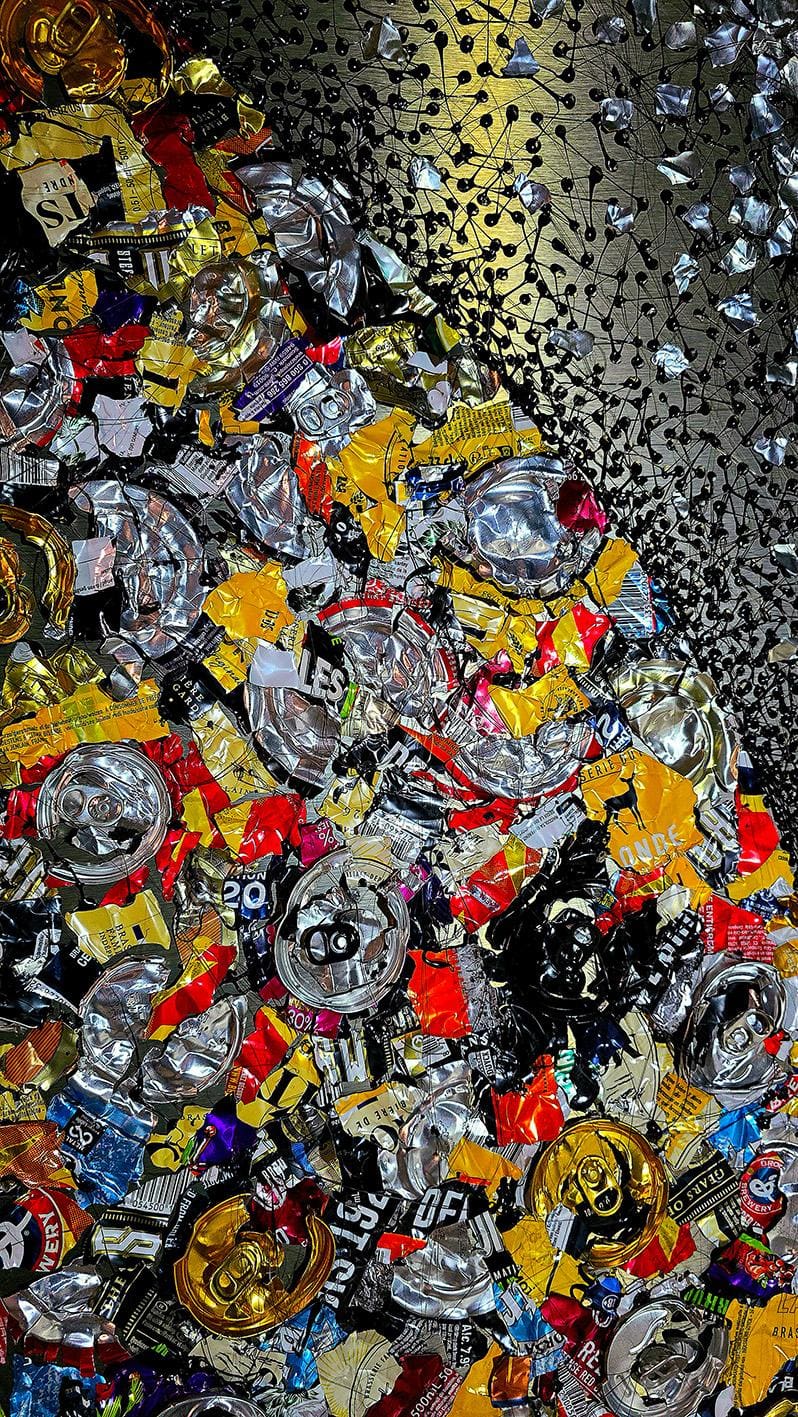
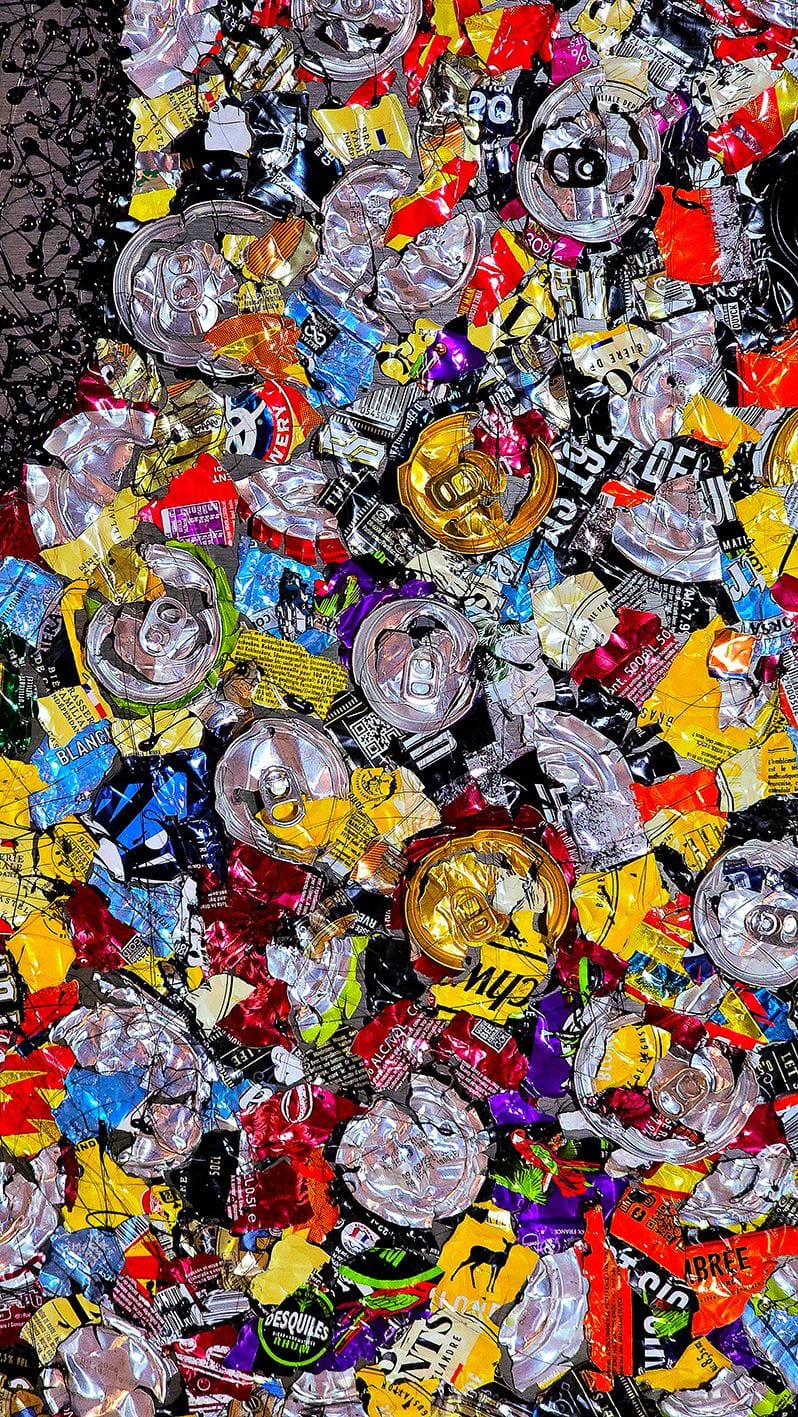
Aluminum cans — remnants of a mass-consumption gesture — are once again at the heart of the process. Crushed, cut, fragmented, recomposed, they shift from being the subjects of photography (as in Mues) to becoming the very material of collage.
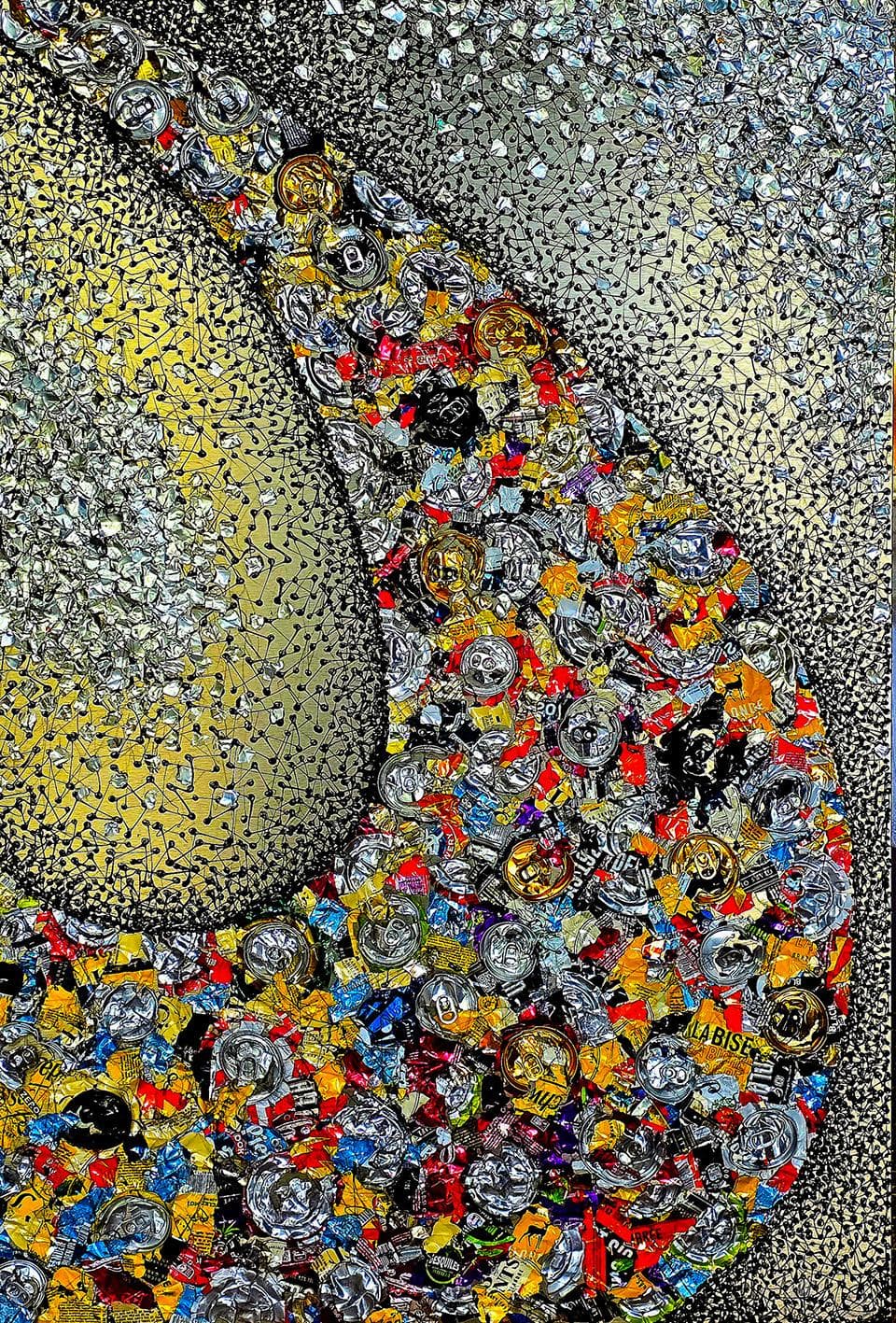
The title Packchwork plays on words: patchwork (an assemblage of diverse fragments) meets pack (as in a pack of beer cans). This double meaning captures the essence of the work — a merging of waste and design, consumption and reconstruction.
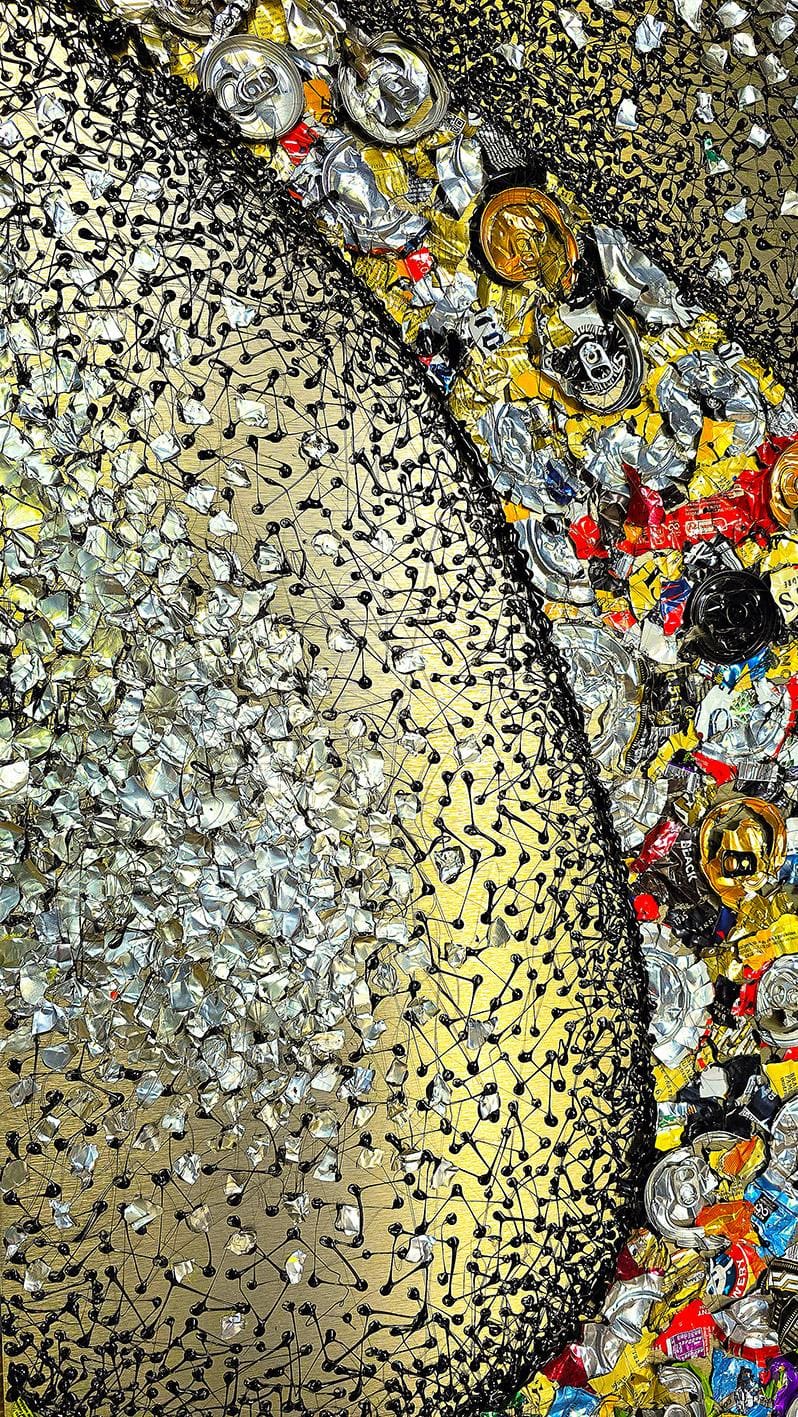
Where Mues focused on metamorphosis — the transformation of discarded matter into image — Packchwork explores composition, the act of bringing fragments together into new wholes. Here, what was once photographed is now assembled, woven into vast visual tapestries. Each piece becomes a rhythmic surface where logos, colors, and dents merge into a new texture — a visual symphony born from industrial debris.
Mues speaks of the individual transformation of matter; Packchwork speaks of its collective recomposition. Together, they form a dialogue: from the introspective gaze of a single crushed can to the architectural energy of an entire surface built from hundreds.
The intent remains constant: to transform the residue of consumption into a source of reflection and beauty. To reveal that waste can be reborn as structure, that what is discarded can become lyrical.
In Packchwork, the “pack” becomes a motif, the can a pixel, the act of crushing a rhythmic gesture. Each collage vibrates with color and density, questioning our relationship with consumption, branding, and transformation.
What becomes of an object when it turns into texture?
What becomes of a logo when it dissolves into pattern?
What becomes of consumption when it looks at itself, fractured and reassembled, through the lens of art?
In this continuity between Mues and Packchwork, Pascal di Péri invites us to perceive the poetic pulse of recycled matter — an aesthetic of resilience where the humble can becomes a bearer of memory, rhythm, and rebirth.
— Pascal di Péri